
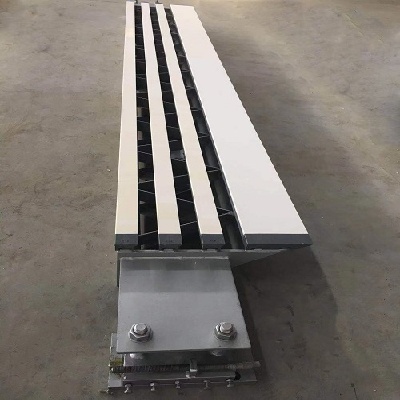
In the Fourdrinier forming section, dewatering elements are subjected to a punishing combination of continuous sliding friction, vacuum-induced normal loading, and abrasive slurry. The choice between ceramic and ultra-high-molecular-weight polyethylene (UHMWPE) dictates not only the lifespan of the element itself but also the lifespan of the forming fabric and the stability of the sheet formation.
This technical analysis explores the material properties, failure modes, and application-specific selection criteria for these two dominant materials.
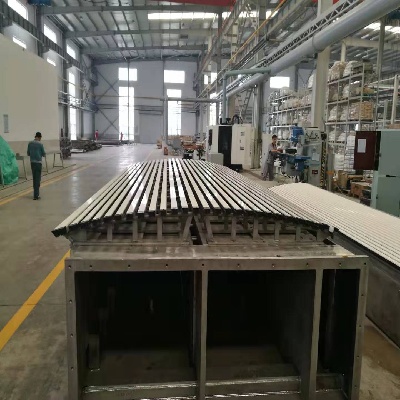
Ceramic Dewatering Elements: Typically manufactured from Alumina (Al₂O₃), Silicon Carbide (SiC), or Silicon Nitride (Si₃N₄). They function as rigid, highly wear-resistant surfaces that maintain precise hydrodynamic geometries.
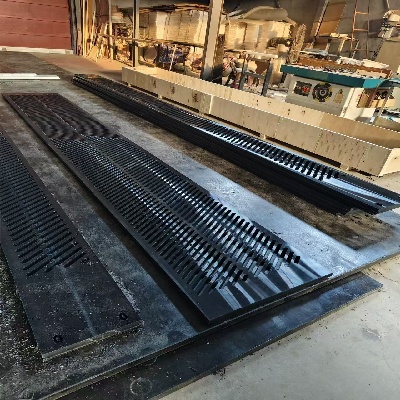
UHMWPE Dewatering Elements: A thermoplastic polymer characterized by long chains that provide high impact toughness and low friction. They function as sacrificial wear surfaces that are easy to machine and install.
Ceramics possess exceptionally high hardness. In abrasive environments—such as those with high filler content (calcium carbonate, titanium dioxide) or recycled furnishes—ceramics resist progressive wear. Because they maintain their original hydrofoil angle and surface flatness, the hydrodynamic pressure pulses remain consistent over time.
The Failure Mode: Brittle fracture. Ceramics have low fracture toughness. Impact from tools, poor support structures, or thermal shock can cause chipping. A chipped ceramic edge acts like a knife, rapidly slicing through the forming fabric.
UHMWPE is tough. It absorbs impacts that would shatter ceramic, making it easier to handle and install. It also offers low friction, which can be beneficial in certain low-load applications.
The Failure Mode: Wear and creep. Under sustained vacuum loading, UHMWPE can deform. As the surface wears, the geometry changes. Furthermore, abrasive particles can become embedded in the polymer matrix, turning the cover into a grinding surface that wears the fabric.
The forming table is not a uniform environment. The vacuum load, stock consistency, and water volume change as the sheet moves down the table.
Located at the headbox jet landing area.
Ceramic: Excellent for long-term dimensional stability.
UHMWPE: Acceptable for moderate speeds where initial cost is a factor.
Generate the hydrodynamic pulses.
Ceramic: Preferred for high-speed, abrasive furnishes. Maintains the critical blade angle.
UHMWPE: Suitable for lower-speed machines.
The vacuum force pulls the fabric tightly against the cover.
Ceramic: Often mandatory here. Silicon carbide or silicon nitride is preferred for extreme wear resistance and strength.
UHMWPE: Requires careful evaluation. Deformation and creep are significant risks.
For mills looking to upgrade their wet-end equipment, understanding how these elements interact with the Suction Couch Roll and downstream press section is vital. HUATAO GROUP supplies a complete range of Paper Machine Equipment to optimize this transition.
A high-hardness ceramic does not automatically guarantee low fabric wear. Surface roughness, edge rounding, and joint alignment are critical. A poorly finished ceramic surface will destroy a fabric faster than a worn UHMWPE cover.
Conversely, UHMWPE softness does not guarantee fabric protection. A deformed polymer cover creates uneven contact pressure, leading to localized fabric wear and uneven drainage.
To calculate the true cost:
Total Operating Cost = Element Cost + Fabric Wear Cost + Vacuum Energy + Maintenance + Downtime
When drainage profiles become unstable due to worn elements, it often manifests as sheet defects. Refer to How to Solve Paper Wrinkling Problems for troubleshooting related web issues.
When specifying new dewatering elements, provide the supplier with:
Machine speed and width.
Furnish type and filler content.
Vacuum levels at each box.
Existing element drawings (including blade angles).
Forming fabric specifications.
Required material (Ceramic grade or UHMWPE formulation).
Q1: Do ceramic dewatering elements always last longer than UHMWPE?
Ceramic offers superior abrasive wear resistance. However, actual service life depends on installation quality and protection from impact. A chipped ceramic element can fail immediately.
Q2: Are ceramic hydrofoils better for high-speed Fourdrinier machines?
Yes. They maintain their geometry and resist wear better than UHMWPE at high speeds.
Q3: Can UHMWPE dewatering elements be used on high-speed paper machines?
Specially engineered polymer grades may be suitable for certain positions, but conventional UHMWPE generally wears too quickly.
Q4: Do ceramic suction box covers damage forming fabrics?
Properly finished and installed ceramic covers provide excellent fabric compatibility. Damaged or rough covers will cause severe wear.
Q5: What is the difference between alumina and silicon carbide dewatering elements?
Silicon carbide offers higher hardness and thermal conductivity, often used in demanding high-load applications. Premium alumina is widely used in conventional forming sections.
Q6: Why do UHMWPE hydrofoil blades wear unevenly?
Often caused by incorrect alignment, uneven fabric tension, or excessive vacuum loading.
Q7: Can I replace UHMWPE hydrofoils with ceramic hydrofoils directly?
Not always. Check the support structure and mounting hardware, as ceramics require rigid support.
Q8: Which material offers the lowest total operating cost?
Ceramic often provides lower long-term cost in abrasive, continuous operations. UHMWPE may be more economical in moderate-duty applications.
Email: market@huataogroup.com
Phone / WhatsApp: +86 18033763037
Website: http://www.papermakingtech.com
We warmly welcome customers from around the world to contact us and establish mutually beneficial partnerships.
can not be empty
can not be empty

HUATAO GROUP
ADD : No.298 Zhonghua North Street, Xinhua District, Shijiazhuang City, China.
TEL : +86 0311 80690567
EMAIL :market@huataogroup.com
Web: www.papermakingtech.com
Mobile: +86 18033763037 (  WhatsApp)