
Paper two-sidedness is a common quality concern in papermaking, particularly on conventional Fourdrinier paper machines. Although differences between the two surfaces are often noticed in the finished sheet, their origin can usually be traced back to wet-web formation and dewatering.
When drainage, fiber orientation and the distribution of fines and fillers are not sufficiently balanced through the thickness of the sheet, the wire side and top side develop different structures.
These differences may later influence smoothness, porosity, absorbency, printability, surface strength and optical properties. Uneven sheet structure can also contribute to different shrinkage stresses during drying and ultimately to paper curl.
For this reason, reducing two-sidedness requires attention not only to finishing, but to the complete process from forming through pressing, drying and calendering.
On a conventional Fourdrinier machine, drainage takes place predominantly toward the forming fabric.
During the early stages of sheet formation, some fines and filler particles can migrate toward the wire side or pass through the forming fabric with the white water.
At the same time, the developing fiber mat acts as a filtration layer. More fines and fillers can therefore remain in the upper portion of the wet web.
This creates differences in composition between the wire side and top side.
Fiber orientation can further increase this structural asymmetry. As fibers travel along the machine direction and water is removed through the forming fabric, different fiber arrangements may develop through the thickness of the sheet.
The effects become increasingly visible during subsequent pressing and drying.
One of the most direct approaches is to reduce dependence on one-sided drainage.
A Gap Former introduces the stock jet between two forming fabrics. The wet web forms between these fabrics while drainage occurs toward both sides.
Compared with conventional one-sided Fourdrinier drainage, this forming principle creates a more balanced environment for sheet development and helps reduce structural differences between the two surfaces.
For an existing Fourdrinier machine, installing a Top-Wire Former can provide another practical approach.
The additional upper forming fabric creates a second drainage direction as the wet web passes between the top and bottom fabrics.
This arrangement can help reduce fiber flocculation, improve formation and promote greater uniformity through the sheet thickness.
For mills considering a forming-section rebuild, adding a Top-Wire Former may therefore be an effective option for improving two-sidedness without completely replacing the existing forming section.
Not every paper mill requires a major forming-section rebuild.
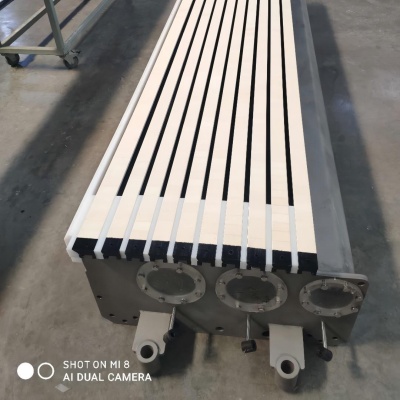
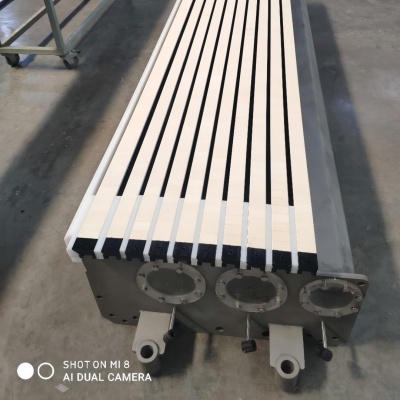
Targeted changes to existing dewatering equipment can also improve the forming process.
A Dandy Roll applies controlled mechanical action to the upper surface of the developing wet web.
Under suitable operating conditions, it can improve formation and help redistribute fibers and fillers.
The source material cites research indicating that formation improvement of approximately 30% has been reported under suitable conditions. Actual results will depend on stock properties, machine configuration and operating parameters.
Rapid initial drainage is not always beneficial.
If drainage is too aggressive, fines and fillers can be driven toward the wire side and lost into the white water system.
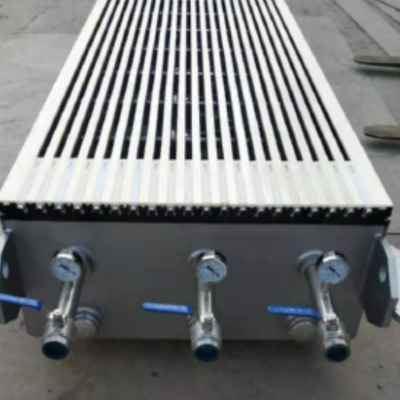
Using properly selected dewatering foils and other controlled dewatering elements instead of highly aggressive table-roll drainage can create a more progressive drainage profile.
This allows the sheet structure to develop more gradually and can help maintain a more uniform distribution of fibers, fines and fillers.
The press section is another important area to evaluate.
Pressing affects not only dryness but also surface strength, absorbency and sheet structure. If the two surfaces experience substantially different pressing conditions, existing two-sidedness may be reinforced.
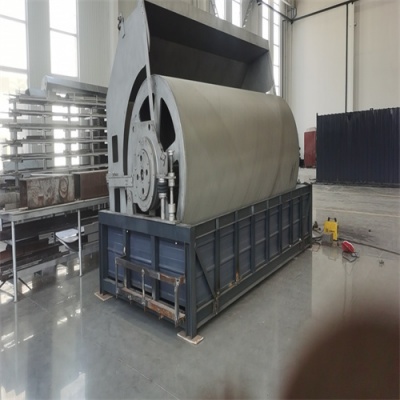
Depending on the paper grade and paper machine arrangement, suitable press-section components may include:
The objective should be effective and uniform dewatering while avoiding unnecessary differences between the two surfaces.
This is why press optimization should be considered together with the forming and dewatering process.
The calender section provides another opportunity to reduce differences that remain after drying.
Heated calender rolls can improve paper smoothness and reduce surface variations when roll temperature, nip pressure and sheet moisture are properly controlled.
The goal is not simply to apply higher nip pressure. Excessive calendering can influence other properties of the sheet, including bulk.
A balanced operating window is therefore essential.
Uneven drying can create different stress and strain conditions between the two sides of the paper.
A steam box installed in the dryer or calender area can apply controlled moisture to the sheet.
Re-moistening the surface that has dried earlier can help balance moisture-related stresses and reduce curl associated with asymmetrical drying conditions.
This approach can be particularly relevant to certain single-tier dryer configurations.
Trying to solve two-sidedness by changing only one parameter may produce limited results.
A more effective troubleshooting path is:
Stock Flow → Headbox → Forming → Dewatering → Pressing → Drying → Calendering
If excessive one-sided drainage is the main cause, increasing calender pressure does not remove the root problem.
Similarly, upgrading the former while ignoring press configuration or drying conditions may leave other causes of sheet asymmetry unresolved.
For better results, paper mills should evaluate the complete forming and finishing process and identify where the largest difference between the two sides is being introduced.
Since 2008, Huatao Group has focused on the production and export of pulp and paper machinery, components and spare parts.
For paper mills working to improve sheet formation, dewatering performance and paper two-sidedness, Huatao Group supplies:
Solutions can be selected according to the existing paper machine configuration and the specific quality problem to be addressed.
For assistance with poor formation, excessive paper two-sidedness, paper curl or uneven surface properties, contact Huatao Group for equipment selection and paper machine upgrade solutions.
Website: www.papermakingtech.com
Email: market@huataogroup.com
WhatsApp / WeChat: +86 18033763037
#PaperMachine
#PaperTwoSidedness
#PaperIndustry
#Papermaking
#PulpAndPaper
#PaperMill
#PaperFormation
#GapFormer
#TopWireFormer
#Fourdrinier
#DandyRoll
#DewateringElements
#FormingSection
#PressSection
#SuctionPressRoll
#BlindDrilledPressRoll
#JumboPressRoll
#CalenderRoll
#PaperMachineUpgrade
#PaperQuality
can not be empty
can not be empty

HUATAO GROUP
ADD : No.298 Zhonghua North Street, Xinhua District, Shijiazhuang City, China.
TEL : +86 0311 80690567
EMAIL :market@huataogroup.com
Web: www.papermakingtech.com
Mobile: +86 18033763037 (  WhatsApp)