
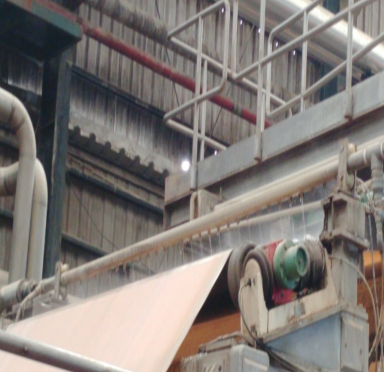
A press-section web break does not always indicate a damaged felt, faulty roll or mechanical problem.
Once the most visible equipment-related causes have been eliminated, the next investigation should focus on how the paper machine is actually being operated.
Small changes in press loading, speed relationships, web tension, shower conditions or chemical dosage can alter wet-sheet behavior and create conditions in which repeated breaks occur.
Each press nip requires appropriate loading.
When nip load becomes excessive, the wet sheet may experience crushing or mechanical damage.
Reducing the load too far creates the opposite risk. Inadequate press dewatering leaves additional moisture in the sheet and may reduce wet-web strength.
The operating target should therefore provide effective water removal without unnecessarily damaging the wet sheet.
Load distribution also matters.
Individual press nips should work together as a balanced press section rather than allowing one nip to operate under inappropriate loading conditions.
The wet paper web must travel through several machine sections before sufficient strength develops.
Check the speed differential between relevant press positions and across the transitions from the forming section to the press section and from the press section to the dryer section.
In combined or compact press arrangements, internal speed relationships deserve particular attention.
If the draw or web tension becomes excessive, the wet sheet can be overstretched.
The lower its wet strength, the smaller the operating margin becomes.
For machines using rope threading, carrier rope alignment, condition, tension and operation should also be included in the inspection.
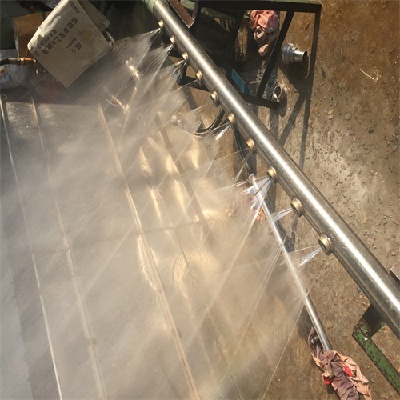
Press felt lubrication and high-pressure cleaning showers help maintain the operating condition of the felt.
Flow and pressure should remain appropriate for the application.
Poor shower performance can alter felt cleanliness and permeability and subsequently affect dewatering and sheet release.
For this reason, shower conditions belong in the web-break troubleshooting process.
When a paper machine that previously ran normally suddenly develops more frequent breaks, operators should review recent furnish and chemical changes.
Possible variables include:
Fiber Composition
Retention Aids
Drainage Aids
Dry-Strength Agents
Other Wet-End Additives
These chemicals influence more than one property.
Incorrect dosage can change drainage, fiber bonding, formation and sheet strength.
Both excessive and insufficient addition may therefore contribute to conditions that increase web-break frequency.
After mechanical problems have been eliminated, consider checking variables in this order:
Press Nip Load → Load Distribution → Draw → Web Tension → Shower Conditions → Furnish → Chemical Dosage
The purpose is to determine which variable changed before the web-break problem appeared.
A systematic investigation provides more useful information than making several operating changes simultaneously.
Huatao Group supplies pulp and paper machinery, paper machine clothing, press-section components, dewatering equipment, doctoring systems, shower systems and papermaking chemicals for paper mills worldwide.
Huatao Group
Website: papermakingtech.com
Email: market@huataogroup.com
WhatsApp / WeChat: +86 180 3376 3037
#PaperMachine #WebBreak #SheetBreak #PressSection #NipLoad #NipPressure #WebTension #PaperMachineDraw #PressFelt #SprayShower #PapermakingChemicals #DryStrengthAgent #DewateringElements #SuctionPressRoll #DoctorBlade #PaperMachineMaintenance #PulpAndPaper #PaperMill #PaperIndustry #HuataoGroup
can not be empty
can not be empty

HUATAO GROUP
ADD : No.298 Zhonghua North Street, Xinhua District, Shijiazhuang City, China.
TEL : +86 0311 80690567
EMAIL :market@huataogroup.com
Web: www.papermakingtech.com
Mobile: +86 18033763037 (  WhatsApp)