
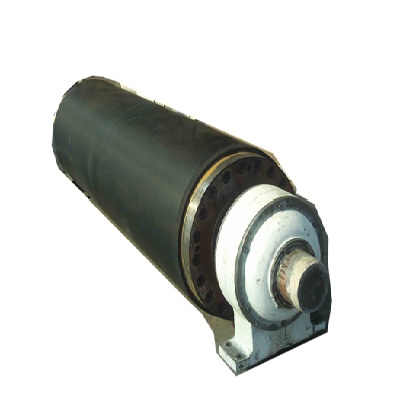
The main difference between a suction press roll and a blind-drilled press roll is how they handle water removed from the wet paper web. A suction press roll uses a perforated shell and an internal vacuum system to assist dewatering, while a blind-drilled press roll uses closed-end holes in its surface covering to temporarily receive water under nip pressure without internal suction.
Both are widely used in Paper Machine and Parts press sections, but they differ in construction, water removal mechanisms, vacuum requirements, maintenance, and operating costs.
For paper mills producing tissue, printing and writing paper, kraft paper, linerboard, or corrugated medium, understanding these differences is essential when selecting new press rolls or replacing existing equipment. Poor press section performance can also contribute to downstream sheet quality issues, as discussed in How to Solve Paper Wrinkling Problems.
A suction press roll uses a perforated shell and internal vacuum box to assist water evacuation. A blind-drilled press roll uses closed-end holes in its covering to receive water under nip pressure, with no internal vacuum. Suction rolls are more complex but offer vacuum-assisted dewatering. Blind-drilled rolls are simpler but rely on mechanical nip pressure and effective hole emptying. Selection depends on press configuration, vacuum infrastructure, and total operating cost.
Suction press rolls use through-drilled shells and internal vacuum boxes.
Blind-drilled press rolls use closed-end holes in the roll covering.
Dewatering efficiency depends on the complete press configuration, not roll type alone.
Suction rolls add vacuum energy demand but may improve sheet dryness.
Blind-drilled rolls avoid internal vacuum but require effective hole cleaning.
Compare total energy cost per tonne, not just vacuum electricity.
Replacing one design with the other is not a direct mechanical substitution.
| Factor | Suction Press Roll | Blind-Drilled Press Roll | ||
| Water removal | Nip pressure + vacuum-assisted drainage | Nip pressure + surface cavity drainage | ||
| Hole structure | Through-drilled shell | Closed-end holes in covering | ||
| Vacuum system | Required |
|
||
| Construction complexity | Higher | Lower | ||
| Maintenance focus | Seals, suction box, shell, cover | Cover, hole pattern, water carryover | ||
| Energy demand | Includes vacuum system | No internal roll vacuum | ||
| Main operating risk | Vacuum leakage, plugging, shell fatigue | Hole plugging, rewetting, carryover | ||
| Selection basis | Vacuum-assisted dewatering needs | Nip design, water load, speed |
A Suction Press Roll, also known as a Vacuum Press Roll, typically consists of a perforated rotating shell, a stationary internal suction box, vacuum sealing components, roll journals, bearings, and a suitable roll covering.
During operation, the wet paper web and press felt pass through the press nip. Mechanical pressure forces water from the paper sheet into the press felt. The internal vacuum zone assists water movement and evacuation through the perforated roll structure. The combination of nip pressure, available void volume, and vacuum-assisted drainage helps control water removal.
Key components include:
Perforated roll shell with through-drilled holes
Internal stationary suction box
Vacuum sealing strips and end deckles
Rubber or polyurethane roll covering
Bearings, journals, and drive components
Vacuum piping and water separation equipment
The suction zone must be positioned correctly relative to the press nip and felt path. Improper vacuum settings, worn seals, or blocked suction holes can reduce dewatering performance.
For further technical information, read How Much Do You Know About Vacuum Press Rolls in Papermaking?.
A Blind-Drilled Press Roll is generally constructed with a solid roll body or shell and a rubber or polyurethane covering containing numerous closed-end holes.
Unlike a suction press roll, the holes do not extend through the roll shell to an internal vacuum chamber. As the wet paper web passes through the nip, water is pressed into the felt and the available blind-hole cavities. After the roll leaves the nip, the collected water must be evacuated through centrifugal action, surface drainage, doctoring, and suitable felt conditioning arrangements.
Blind-drilled rolls therefore rely primarily on mechanical nip pressure and effective water removal from the surface cavities.
The main components typically include:
Steel or cast-iron roll body
Rubber or polyurethane covering
Precision blind-drilled surface holes
Roll journals and bearings
Surface water removal and cleaning arrangements
Because no internal suction box is required, the roll construction is generally less complex than that of a suction press roll. However, the absence of internal vacuum does not guarantee superior efficiency or lower total operating cost.
Press rolls operate in the press section of the paper machine. Upstream, the forming section produces a wet web that is transferred to the press section. Downstream, the pressed web proceeds to the dryer section. Press roll performance affects sheet dryness entering the dryers, steam consumption, sheet strength, and machine runnability.
Poor press section dewatering increases the drying load and can contribute to sheet quality problems. For related troubleshooting, see How to Solve Paper Wrinkling Problems.
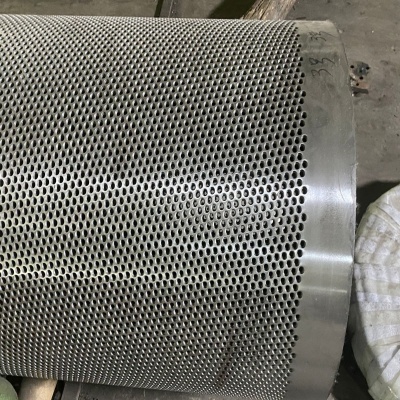
Suction press roll shells are typically made from corrosion-resistant stainless steel or bronze alloys. The shell contains through-drilled holes that connect to the internal suction box. Shell thickness, hole diameter, hole pattern, and open area influence structural strength and water evacuation capacity.
Blind-drilled press roll bodies are generally made from steel or cast iron. The roll body provides structural rigidity and supports the roll covering.
Both roll types use rubber or polyurethane coverings. The covering must provide suitable resilience, wear resistance, and dimensional stability under repeated nip loading.
For suction press rolls, the covering contains through-holes aligned with the shell perforations. For blind-drilled rolls, the covering contains closed-end holes that receive water during the nip.
Suction press rolls require an internal stationary suction box with sealing strips and end deckles. The suction zone must be positioned correctly relative to the press nip. Worn seals can cause vacuum leakage and reduce dewatering efficiency.
Both roll types require robust bearing and journal assemblies to handle nip loading, rotation, and vibration. Regular inspection and lubrication are essential for reliable operation.
The suction press roll combines mechanical nip pressure with vacuum-assisted drainage. Water is pressed from the sheet into the felt, and the vacuum zone draws water through the perforated shell into the suction box. The water is then discharged through the vacuum piping and separation system.
The effective water removal depends on:
Nip pressure and dwell time
Incoming sheet dryness
Press felt permeability and saturation
Vacuum level and suction zone position
Roll surface open area
Machine speed
Water evacuation capacity
An incorrectly adjusted suction system may consume additional energy without delivering a proportional improvement in dryness.
The blind-drilled press roll relies on surface cavity volume to receive water during the nip. After the roll leaves the nip, the water must be evacuated by centrifugal action, surface drainage, doctoring, and felt conditioning.
The effective water removal depends on:
Hole diameter, depth, and spacing
Roll covering properties
Nip pressure and dwell time
Machine speed
Water evacuation from the holes
Felt conditioning and drainage arrangements
If residual water remains in the holes, it can contribute to rewetting or unstable dewatering. A larger theoretical hole volume does not necessarily mean better water removal if the holes cannot be emptied effectively.
There is no universal answer because dewatering efficiency depends on the complete press configuration. A suction press roll may provide advantages where vacuum-assisted drainage is needed, while a blind-drilled roll may perform effectively when the nip loading, press felt, and water removal arrangements are properly designed.
The press felt plays a critical role in both roll designs. Its structure must provide suitable permeability, compression resistance, water-handling capacity, and dimensional stability. A contaminated or compacted felt can limit dewatering even when the press roll itself is in good condition.
For this reason, paper mills should evaluate roll surface geometry and felt performance together.
HUATAO GROUP supplies Paper Machine Clothing and Press Section Spare Parts for different papermaking applications, including Felt Suction Box dewatering elements and Suction Couch Roll components.
| Performance indicator | Why it matters |
| Sheet dryness before the press | Establishes incoming water load |
| Sheet dryness after the press | Measures actual dewatering result |
| Press nip line load | Determines mechanical loading |
| Press felt moisture and permeability | Indicates felt water-handling performance |
| Vacuum level and airflow | Evaluates suction system operation |
| Cross-machine moisture profile | Identifies uneven dewatering |
| Sheet marking | Detects undesirable roll surface effects |
| Sheet transfer stability | Indicates runnability and transfer stability |
| Total energy consumption | Supports operating cost comparison |
A controlled comparison under similar paper grades, machine speeds, and furnish conditions provides more useful information than nominal specifications alone.
Vacuum Seals and Suction Box: Worn sealing strips can cause vacuum leakage and reduce suction efficiency. Inspect the suction box, seals, lubrication arrangements, and vacuum zone settings according to the manufacturer's maintenance instructions.
Perforated Roll Shell: The perforated shell operates under repeated mechanical loading. Check for corrosion, fatigue damage, abnormal vibration, and other structural defects. Inspection methods and intervals should follow the roll manufacturer's engineering recommendations.
Suction Holes: Fibers, fillers, pitch, and stickies may accumulate in suction openings. Blocked holes reduce effective drainage area and can contribute to uneven dewatering. Cleaning methods must be compatible with the shell material and roll covering.
Blind-Hole Cleaning: Accumulated contaminants can reduce the effective cavity volume. Inspect for plugged holes and select suitable cleaning methods.
Roll Cover Wear: Check for cracks, hardening, uneven wear, delamination, and surface damage. The roll covering must maintain suitable resilience under repeated nip loading.
Water Carryover: If water remains in the blind holes after leaving the nip, it may return toward the incoming felt or paper web. Proper doctoring, drainage, and felt conditioning can help reduce this problem.
A suction press roll requires vacuum generation, which adds electrical energy demand. A blind-drilled press roll does not require an internal roll vacuum system, potentially reducing vacuum-related energy consumption.
However, the actual energy comparison should also consider dryer steam consumption, press-section drive power, felt conditioning vacuum, water removal efficiency, production speed, and maintenance requirements.
For example, a suction press roll may consume more electrical energy but provide sufficient additional sheet dryness to reduce dryer-section steam demand. Conversely, a properly designed blind-drilled press may achieve the required dryness without the additional vacuum infrastructure.
The correct comparison is total energy cost per tonne of finished paper, not vacuum electricity consumption alone.
Neither design has a universally longer service life. Actual service life depends on shell material, roll cover quality, nip loading, machine speed, corrosion conditions, vibration, and maintenance practices.
Regular dynamic balancing, bearing inspections, roll cover measurements, and preventive maintenance are essential for both designs.
The selection should begin with the existing press configuration and the paper mill's production objectives. A roll that performs well on one paper machine may not be suitable for another machine operating at a different speed, nip load, or paper grade.
A suction press roll may be appropriate when:
The press configuration is designed for vacuum-assisted dewatering.
The existing machine already has suitable vacuum infrastructure.
Suction is required for sheet support or transfer stability.
The required press performance justifies the additional system complexity.
The mill can maintain the internal suction box and vacuum sealing system.
Suction press rolls are not automatically the best choice for every high-speed machine. The complete press geometry, loading conditions, and mechanical design must be evaluated.
A blind-drilled press roll may be appropriate when:
The existing press configuration uses mechanically assisted dewatering without internal roll suction.
A suitable felt and surface drainage arrangement is available.
The required water removal can be achieved within the operating window.
Lower mechanical complexity is desirable.
The paper mill is replacing an existing blind-drilled roll with a compatible design.
Blind-drilled rolls should not be selected solely because they eliminate internal vacuum equipment. Their effective void volume, drainage capability, covering design, and risk of water carryover must be evaluated.
Not necessarily. Replacing one design with the other is not always a direct mechanical substitution.
Factors to evaluate include:
Press configuration and nip geometry
Roll diameter and face length
Nip line load and roll deflection
Bearing and journal dimensions
Drive arrangement
Vacuum system and suction zone requirements
Press felt specifications
Sheet transfer conditions
Paper grade and machine speed
Required sheet dryness after pressing
A change in roll design may also require modifications to the felt system, doctoring arrangements, drainage equipment, or press-section layout. A detailed engineering assessment is necessary before implementing such a retrofit.
For paper machine renovation and press-section equipment options, visit Paper Machine Equipment.
To obtain an accurate technical proposal and quotation, provide:
Paper machine manufacturer and model
Paper grade and basis weight range
Machine operating speed
Press roll installation position
Existing roll drawing
Roll diameter and face length
Shell and covering material
Nip line load
Bearing and journal specifications
Vacuum requirements, if applicable
Current dewatering performance
Existing operational problems
These details help the supplier assess dimensional compatibility, structural requirements, and the appropriate roll configuration.
| Symptom | Possible Causes | Checks / Actions |
| Poor sheet dryness after press | Low nip load, felt compaction, vacuum loss | Check nip pressure, felt condition, vacuum level |
| Uneven moisture profile | Blocked suction holes, uneven felt, roll deflection | Inspect roll holes, felt, and nip uniformity |
| Vacuum loss on suction roll | Worn seals, damaged suction box, leaking piping | Inspect seals, suction box, and vacuum system |
| Blind-drilled holes plugged | Contaminants, poor cleaning, cover wear | Clean holes, inspect cover, review cleaning method |
| Water carryover on blind-drilled roll | Ineffective hole emptying, high speed, poor doctoring | Check doctoring, speed, hole condition |
| Sheet marking | Roll surface damage, cover hardening, uneven wear | Inspect cover, grind or replace as needed |
| Excessive vibration | Bearing wear, roll imbalance, misalignment | Check bearings, balance, alignment |
Shift/daily: Observe sheet dryness, moisture profile, and vacuum readings
Weekly: Check felt condition and roll surface appearance
Monthly: Review vacuum system performance and energy consumption
Planned shutdown: Inspect seals, suction box, shell, cover, and bearings
Spare inventory: Critical seals, covers, and bearings by roll type
Actual intervals depend on OEM manuals and operating conditions.
1.Is a suction press roll always better than a blind-drilled press roll?
No. A suction press roll provides vacuum-assisted drainage, but its performance advantage depends on the press design, felt condition, operating speed, and water load. A properly designed blind-drilled roll may provide sufficient dewatering for many applications.
2.Does a blind-drilled press roll require a vacuum pump?
No internal vacuum pump connection is required for the blind-drilled roll itself. However, the paper machine may still require vacuum equipment for felt conditioning, pickup, or other dewatering functions.
3.Which press roll is more energy-efficient?
A blind-drilled roll avoids the vacuum energy associated with an internal suction box. However, overall energy efficiency depends on the resulting sheet dryness, dryer steam consumption, and other operating conditions.
4.Can a suction press roll also have blind-drilled holes?
Yes. Some suction press roll coverings incorporate blind-drilled holes or grooves in addition to the through-drilled suction openings. These surface features can provide additional water-handling capacity, depending on the design.
5.What causes blind-drilled press roll holes to become ineffective?
Common causes include contamination, plugging, covering wear, insufficient water evacuation, and inappropriate operating conditions. These problems can reduce effective void volume and increase the risk of rewetting.
6.What information should I provide when requesting a press roll quotation?
Provide the paper machine manufacturer and model, paper grade, basis weight range, machine speed, roll installation position, existing roll drawing, roll diameter and face length, shell and covering material, nip line load, bearing and journal specifications, vacuum requirements, current dewatering performance, and existing operational problems.
7.How often should press rolls be inspected?
Inspection intervals depend on the roll design, operating conditions, and manufacturer recommendations. Suction rolls typically require regular checks of vacuum seals, suction box, and shell condition. Blind-drilled rolls require checks of hole plugging, cover wear, and water carryover. Daily observation and planned shutdown inspections are common practice.
8.Can I upgrade my press section with a different roll design?
Yes, but it requires engineering assessment. Changing from one roll design to another may affect nip geometry, felt specifications, drainage arrangements, and sheet transfer. A detailed review of the press configuration is necessary before any retrofit.
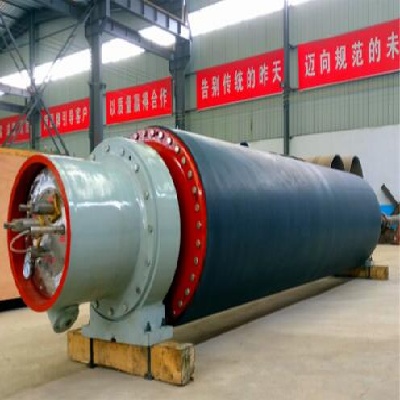
HUATAO GROUP has specialized in supplying pulp and paper machinery, paper machine equipment, and replacement parts to customers worldwide since 2008.
Our paper machine roll product range includes suction press rolls, blind-drilled press rolls, grooved press rolls, jumbo press rolls, suction pickup rolls, Suction Couch Roll, guide rolls, and spreader rolls.
Contact: Huatao
Email: market@huataogroup.com
Phone / WhatsApp: +86 18033763037
Website: http://www.papermakingtech.com
We warmly welcome customers from around the world to contact us and establish mutually beneficial partnerships.
can not be empty
can not be empty

HUATAO GROUP
ADD : No.298 Zhonghua North Street, Xinhua District, Shijiazhuang City, China.
TEL : +86 0311 80690567
EMAIL :market@huataogroup.com
Web: www.papermakingtech.com
Mobile: +86 18033763037 (  WhatsApp)